An event that took place over two thousand years ago, when the Magi journeyed to Bethlehem to pay homage to Jesus is still celebrated across the world on January 6 th as the Feast of the Epiphany. In Goa it is also celebrated in the villages of Reis Magos and Chandor. The villages of Arossim, Cansaulim and Cuelim however have an elaborate pageantry to integrate this Christian cosmology with local customs and symbolism rooted in the histories of village life. While these rituals weave through clan, caste, and class structures they also maintain a deep reverence for the sacred landscape of the area.
Historian Dale Luis Menezes views such feasts as preserving the memory of the economic history of Goa underpinned by a keen sense of Christian cosmology and ethics. He says, “These Christian rituals, like celebrating Christ’s kingship, enacted in an agrarian setup, whether in Three Kings Feast or the more popular Konnsachem Fest celebrated on August 15, are essentially rituals that tie village society to the government—a fact historically significant over the last three or four centuries. These economic-cosmological rituals gave village societies an identity and coherence that today is rightly celebrated as ‘Goan culture.’”
Although the tradition of the Three Kings procession in Arossim, Cansaulim and Cuelim is perceived today as an ancient village tradition, its present form is best understood as a product of change under the Portuguese state and the Goan comunidade system. The requirement that each “King” be drawn from the vangors of the gaunkar families suggests that it was not only shaped by Christian devotion but also a desire to map the authority of the newly baptised gentry onto sacred space. While the date of origin remains undocumented, the 17th century artistic depictions, the rise of confrarias and the embedding of gaunkar privilege in public ritual points to an emergence in the late 17th and early 18th century, after conversion had stabilised but before the comunidades lost political authority. The Three Kings tradition emerges as a locally driven adaptation to the new social and political order of Goa.
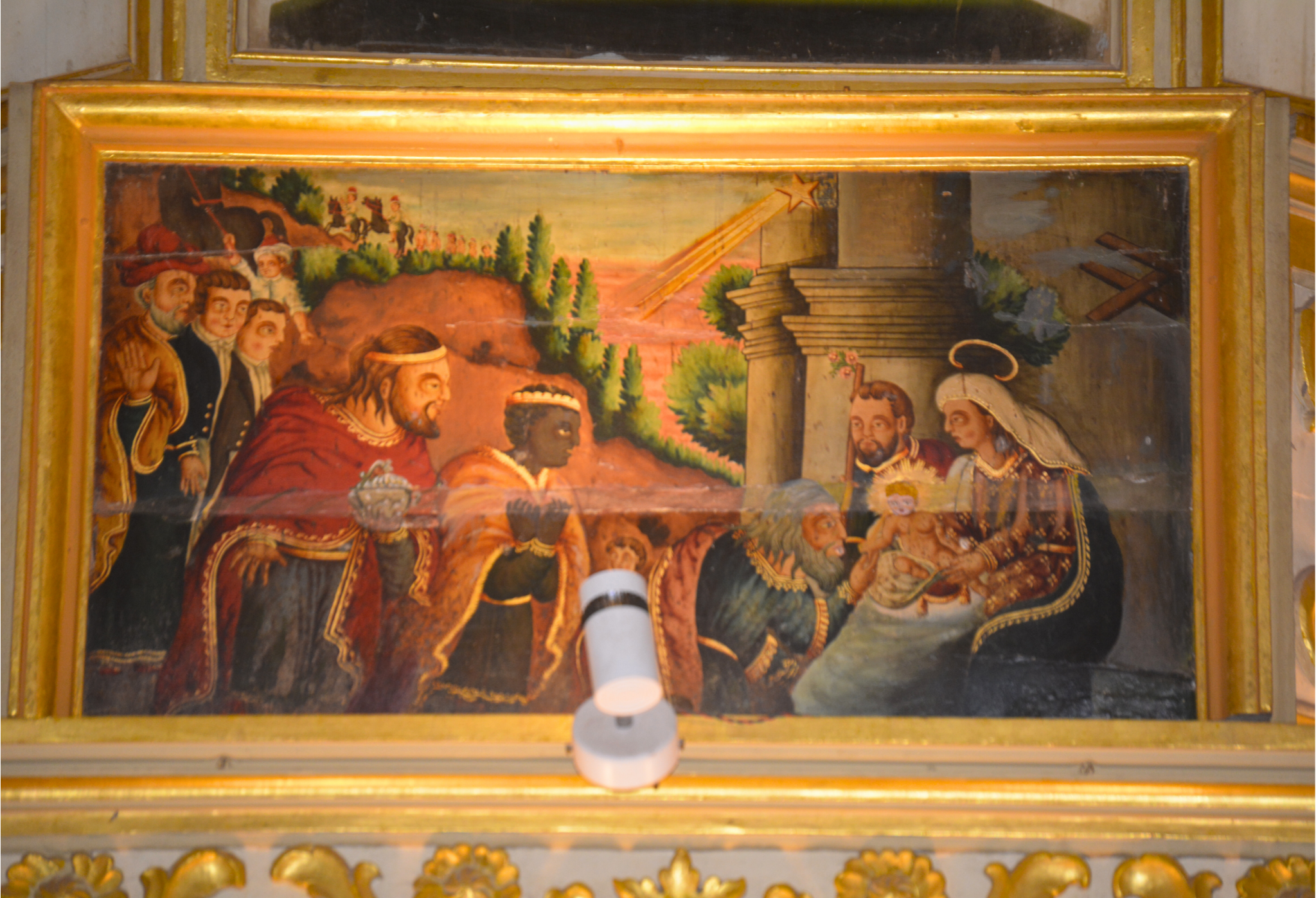
The Adoration of the Magi
Unknown Artist, Nossa Senhora dos Remédios Chapel in Cuelim,
Photograph by Clive Figueiredo
The Chapel of Nossa Senhora dos Remédios (Our Lady of Remedies) in Cuelim is said to have been founded in 1599 by a Jesuit priest, Fr Gonsalo Carvalho and rebuilt in the 18th century. It is an important part of this tradition and the altar piece includes a painting with the familiar scene of the Adoration of the Magi. Whilst they are often called Kings, scripture describes them as Magi who were astrologers or scholars guided by the stars about the birth of a child so important that they journeyed from distant lands to pay their respects. Tradition names them Caspar, Melchior and Balthazar, representing Asia, Europe and Africa and their three gifts of gold for kingship, frankincense for divinity and myrrh foreshadowing death. Their journey symbolizes humanity’s recognition of Christ as King, God and Saviour.
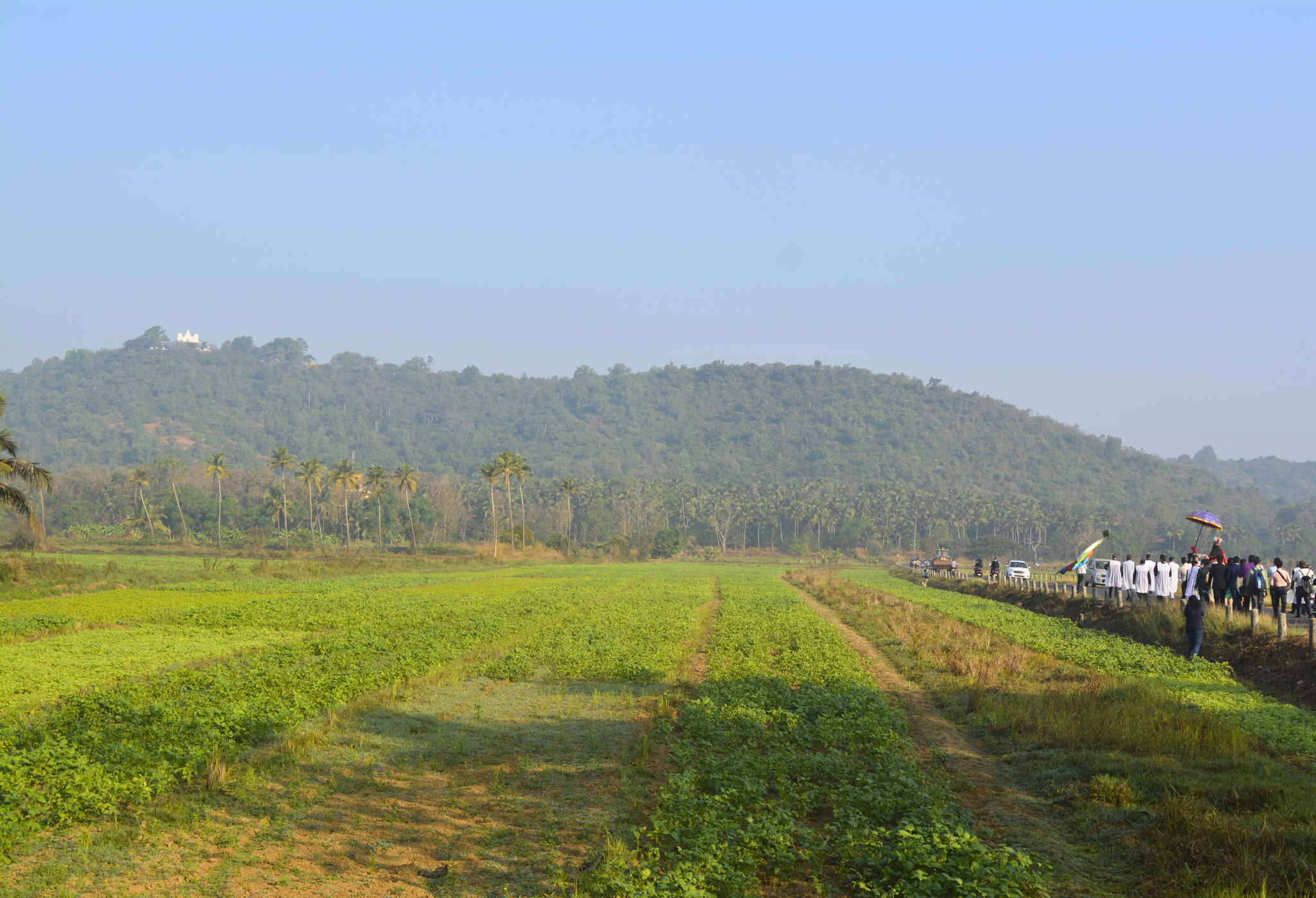
Cuelim Hill with Nossa Senhora dos Remédios Chapel
The tradition is anchored around the journey to the hill
Photograph by Clive Figueiredo
The Right to be King
The choice of the Three Kings follows and old clan-based system rooted in the comunidades of each village. Arossim has about eight vangors which include the families of Nunes, Fernandes; Ozorio, Rodrigues; Costa, Pereira, Godinho; Saldanha; Gomes, Crasto; Costa, Gonsalves, Dias; Antao, Silva, Costa and Correa. Cansaulim has nine vangors which includes the families of Fernandes; Gracias; Baretto; Correa and Cuelim with six vangors which includes the families of Cunha; Alcações; Jacquis; Carvalho; Faleiro and Mascarenhas. In Arossim, a committee of clan elders selects the King in rotation from among the families, and the chosen household also bears the duty of hosting the Feast of St. Lawrence. In Cansaulim and Cuelim, the process is coordinated by an elder, who, in consultation with other gaunkars, has carefully preserved the rotation for decades through deep community knowledge and oral records. The Kings must usually be between eight and eleven years of age, and since each vangor may have several families, the opportunity to represent the clan may come only once in a lifetime. Families often register their sons at birth but if a family’s turn arrives when their son is too young or too old, they may have to wait an entire generation for another opportunity. Preference is given to “sons of the soil,” though if no suitable boy is available, a daughter of a gaunkar family married outside the village may request the honour for her son. The gaunkars can be identified by the white lace opas that they wear for the procession on the day. Only gaunkars are permitted to wear their opas for the procession whilst the same opas are used by Confraria members of all castes for other church feasts and processions. Young gaunkars proudly wear the opas of their fathers and grandfathers and participate in the procession. In the course of this day, young boys take cues from the older members of beliefs and norms that are reinforced from one generation to the next.
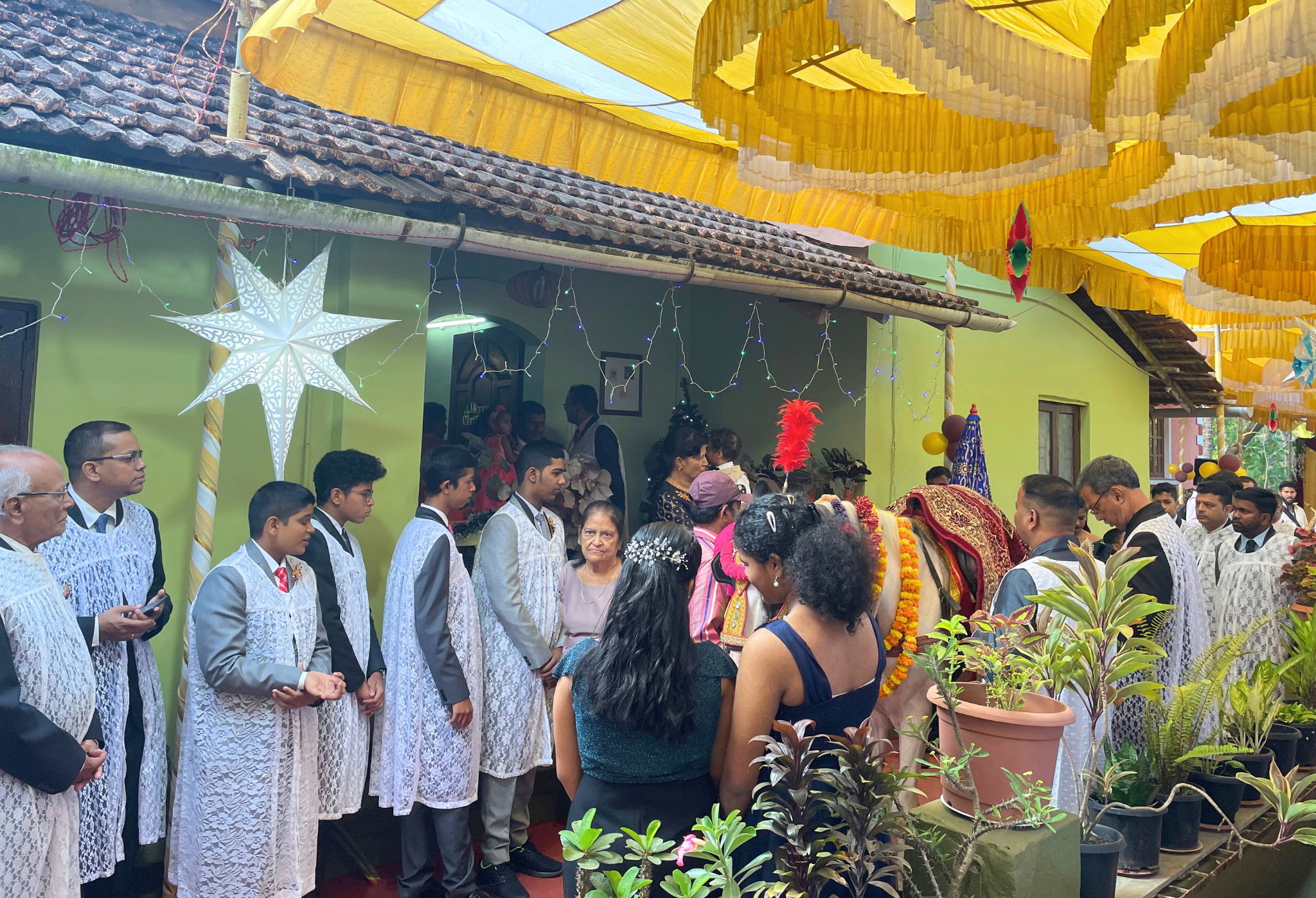
Clan members gathered at the home of the King (Arossim)
Early morning scene at the start of the procession
Photograph by Clive Figueiredo
The Attire of the Three Kings is a blend of royal splendour and village craftsmanship. Each King wears a crown, mantle, beige suit, gloves, a gold cross, and a wig unless he already has long hair. The making of the crown is a cherished local tradition, with artisans like Joseph and Saviana in the villages crafting them by hand. Families visit these makers months in advance to choose designs and materials. In earlier times, crowns were fashioned from bamboo and embroidered cloth; today, they are made with lightweight fine metal wire and foam for comfort, covered in rich velvet and adorned with precious stones or sequins. The process takes nearly two months from start to finish. Mantles, once shared among families and stored in the church, are often custom-made today, continuing the legacy of devotion and artistry that defines the feast. After the event, several families encase the crown in a glass box and display it with pride as reminder of the day their family member was made King. Families spare no expense in making sure the King is dressed in the finest robes and jewellery.
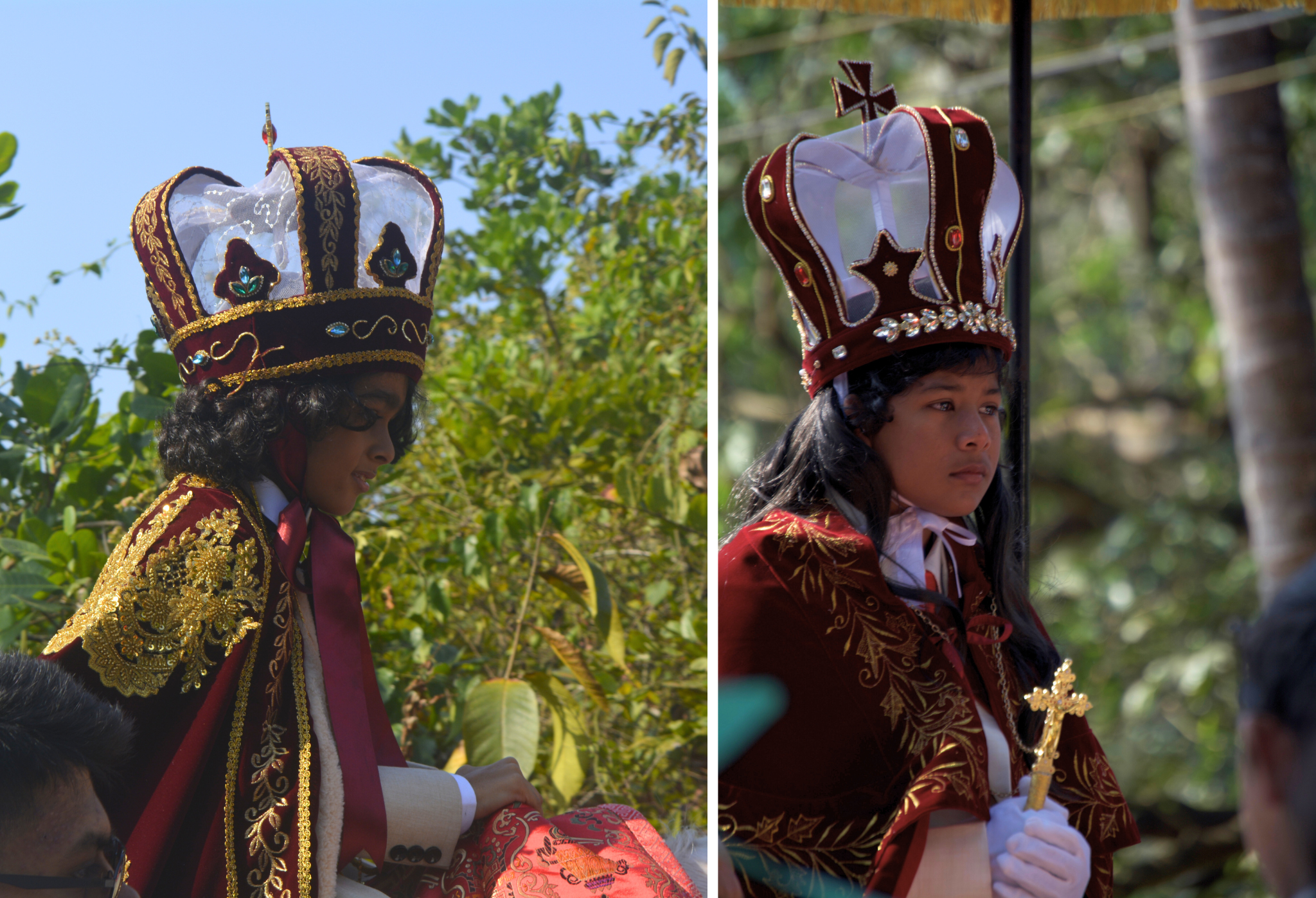
Kings in their mantles and crowns
Handcrafted in the village
Photograph by Clive Figueiredo
The Umbrella of Honour: For the entire day, the King walks under the cover of a richly embroidered umbrella, held aloft by an attendant who walks beside the horse throughout the journey. It provides a sense of dignity and protection that you would expect for royalty and the sacred. Across South Asia, the umbrella also signifies honour and status, marking the King as the chosen figure of the day. Often decorated with gold thread, tassels and velvet fabric, it adds colour and grandeur to the procession while reminding onlookers of the sacred purpose of the journey while also paying homage to the newborn Christ, the true King.
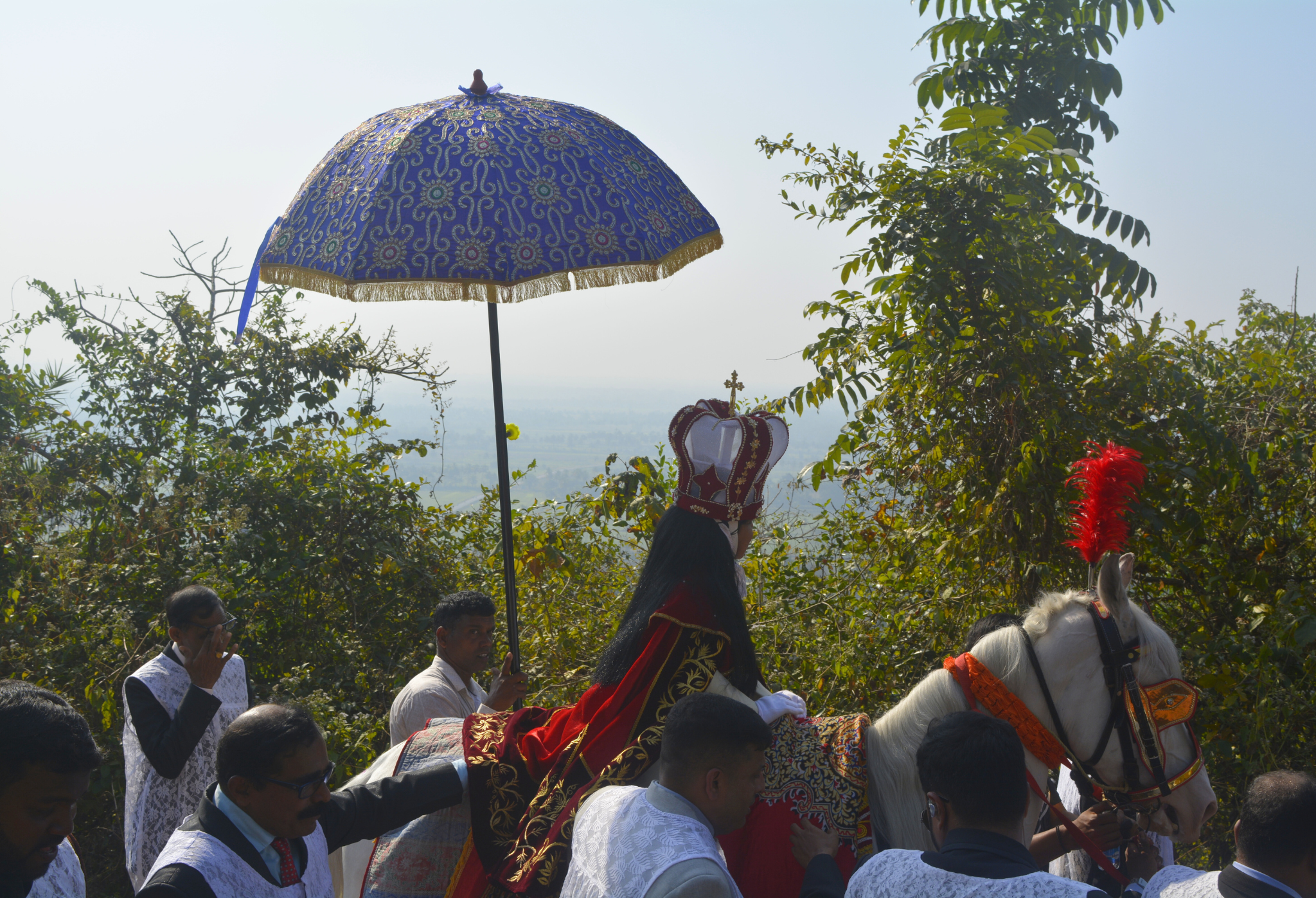
The royal umbrella
A symbol of dignity, protection and divine favour
Photograph by Clive Figueiredo
The horse holds a place of great symbolism in the Three Kings tradition. On the day of the feast, the horses are lined up and chosen by drawing lots to reflect divine fairness, ensuring no family preference influences the choice. The selected King mounts the horse chosen for him and rides through his village, across the fields, and up the hill to the chapel at Cuelim, where the three processions converge. After the Mass and blessings, the horse carries the young King back to his ancestral home, completing the sacred circuit. At the King’s home, the horse circles three times before departure as part of a ritual of blessing and readiness and similarly on its return. Its legs are adorned with rozan, its head finely decorated, and a richly embroidered cloth is placed over the saddle for the young King to sit, completing the image of sacred pageantry.
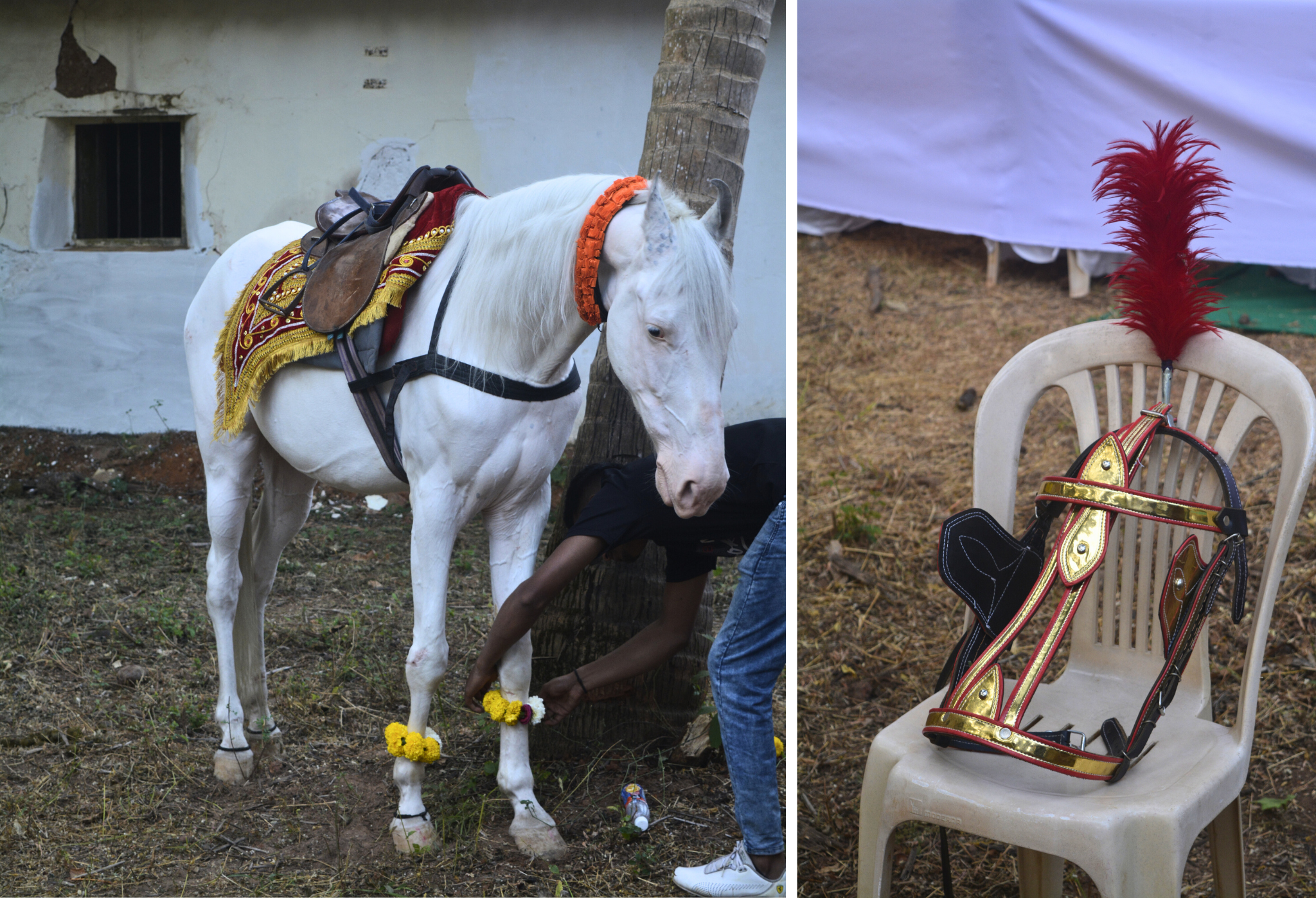
The horse being adorned with marigolds
A symbol of auspiciousness, devotion and festivity
Photograph by Clive Figueiredo
The decoration of the feet of the horses with rozan is interesting because it bears similarities to how the horse of a mounted soldier is depicted in Jan Huygen van Linschoten’s 16th century engraving of the market of Old Goa. It raises questions about the extent to which practices in the Capital were emulated in the villages of Goa.
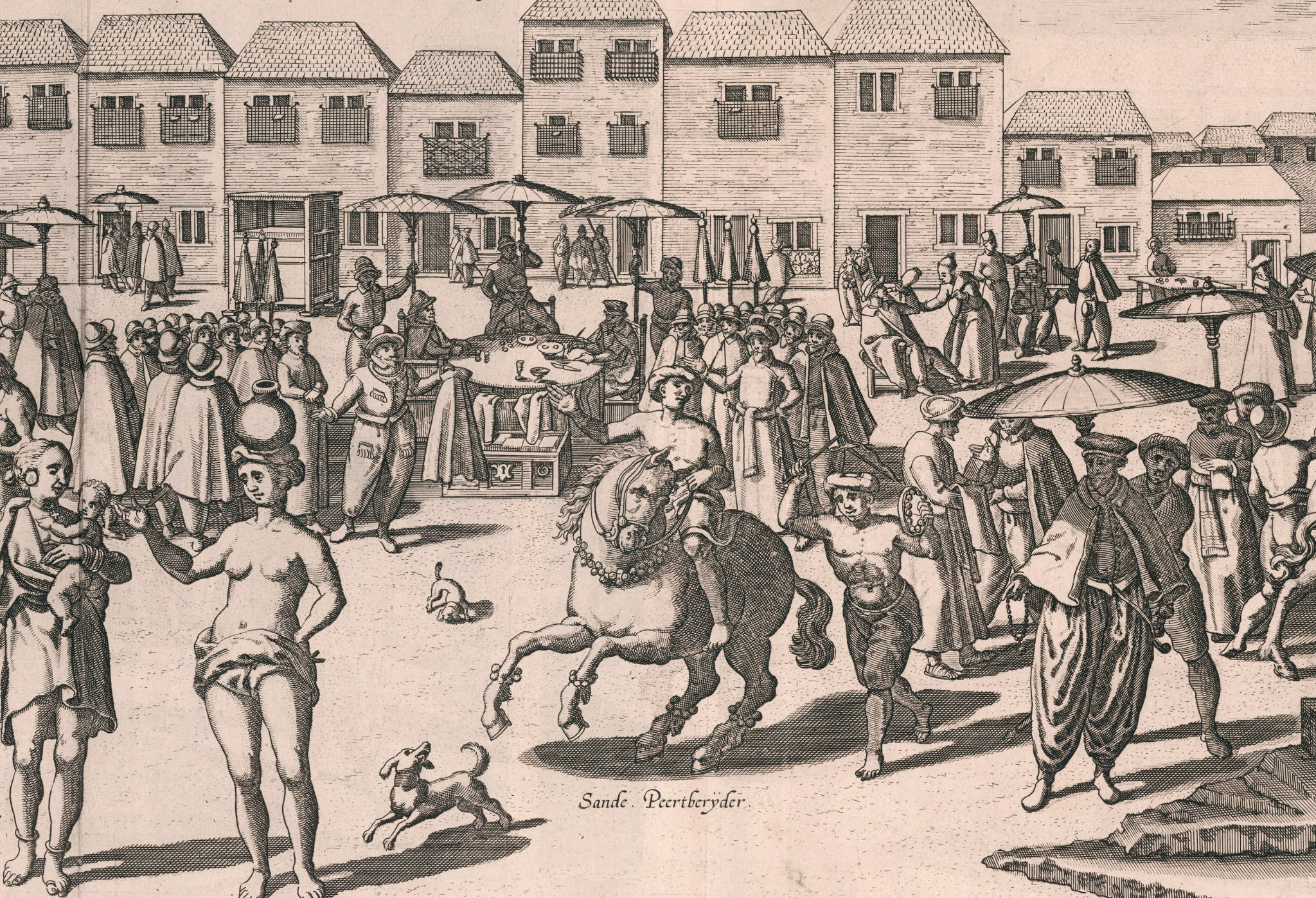
The market of Old Goa by Jan Huygen van Linschoten (1563-1611)
In the center of the image is a mounted soldier (Sande Peertberyder)
Leading each procession is the flag bearer, carrying the distinct flag of his village. This is a role often passed down through generations. There are three flags in all: one each for Arossim, Cansaulim, and Cuelim. The flag bearer walks at the front, raising and waving the flag at significant points such as the King’s ancestral home, the dolmens along the route, and finally at the chapel on the mount. The flagpoles are adorned with leaves and flowers which are often from mango trees, bougainvillea, and other local plants adding colour and fragrance to the journey. Each flag has its own design and symbolism: Arossim’s flag features four horizontal bands of white, green, red, and blue with a central shield bearing a cross and floral motifs; Cansaulim’s displays alternating white and maroon stripes with gold stars between them; and Cuelim’s shows alternating blue, white, and red bands. Together, they embody the unity and distinct heritage of the three villages as they come together in celebration.
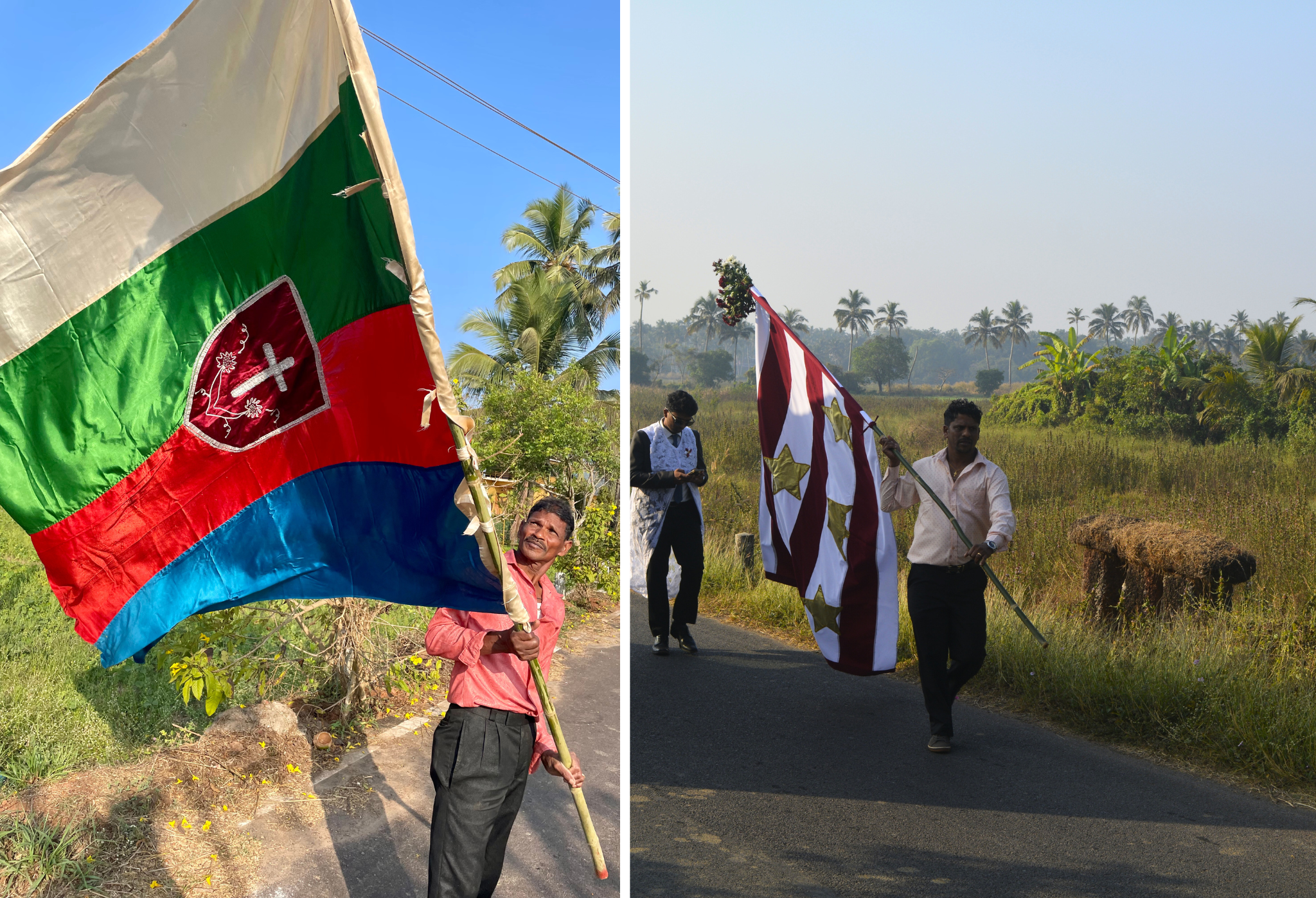
L-R The Flag bearers of Arossim and Cansaulim
Flags are waived at the dolmens in homage to ancestors
Photograph by Clive Figueiredo
Having prepared for months to have all the components in place from the attire and the music to the horse, the King sets off with his entourage through the village via a predetermined route to the base of Cuelim hill. Each King travels with a grand entourage that is comprised of his flag bearer, the umbrella holder, the horse keeper, male clan members in suits and white lace opas, followed by the family and the brass band.
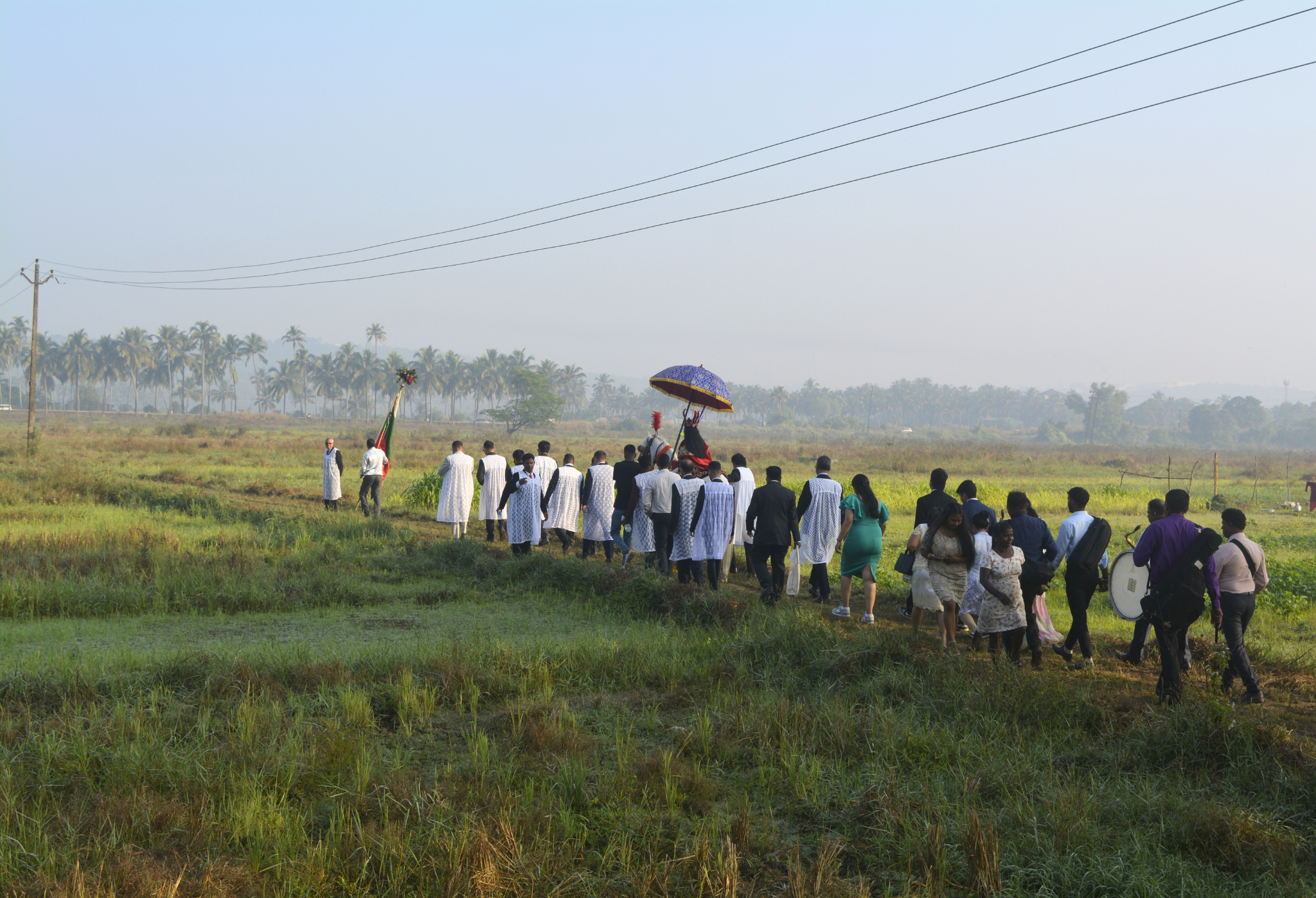
The King’s Entourage
Through ancient routes via the fields
Photograph by Clive Figueiredo
The procession winds through the village, stopping at local chapels then continues along the bunds and fields, passing the ancient dolmens, before reaching the base of the Cuelim hill where the three Kings meet.
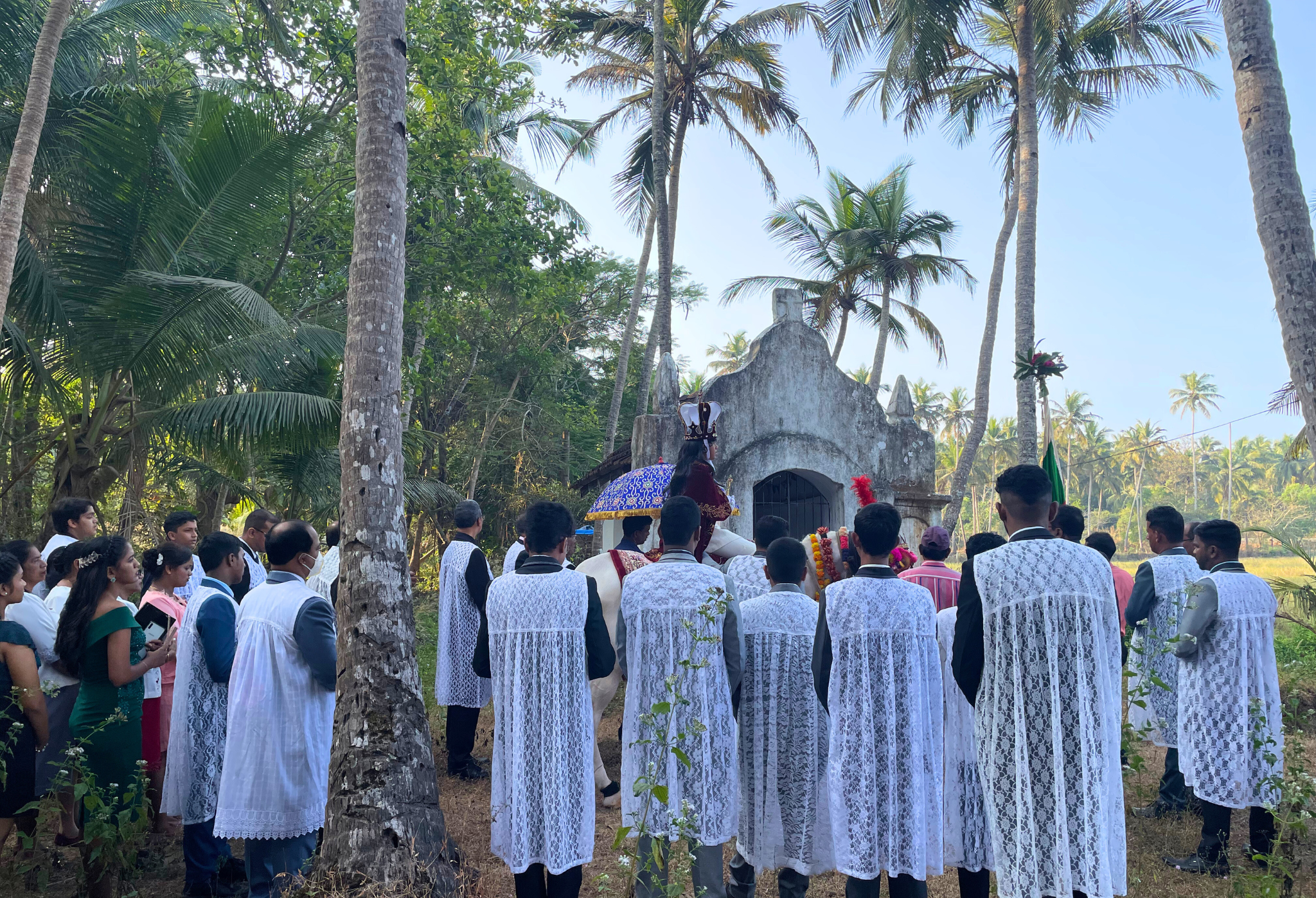
Prayers offered at a chapel
Among the fields, Arossim
Photograph by Clive Figueiredo
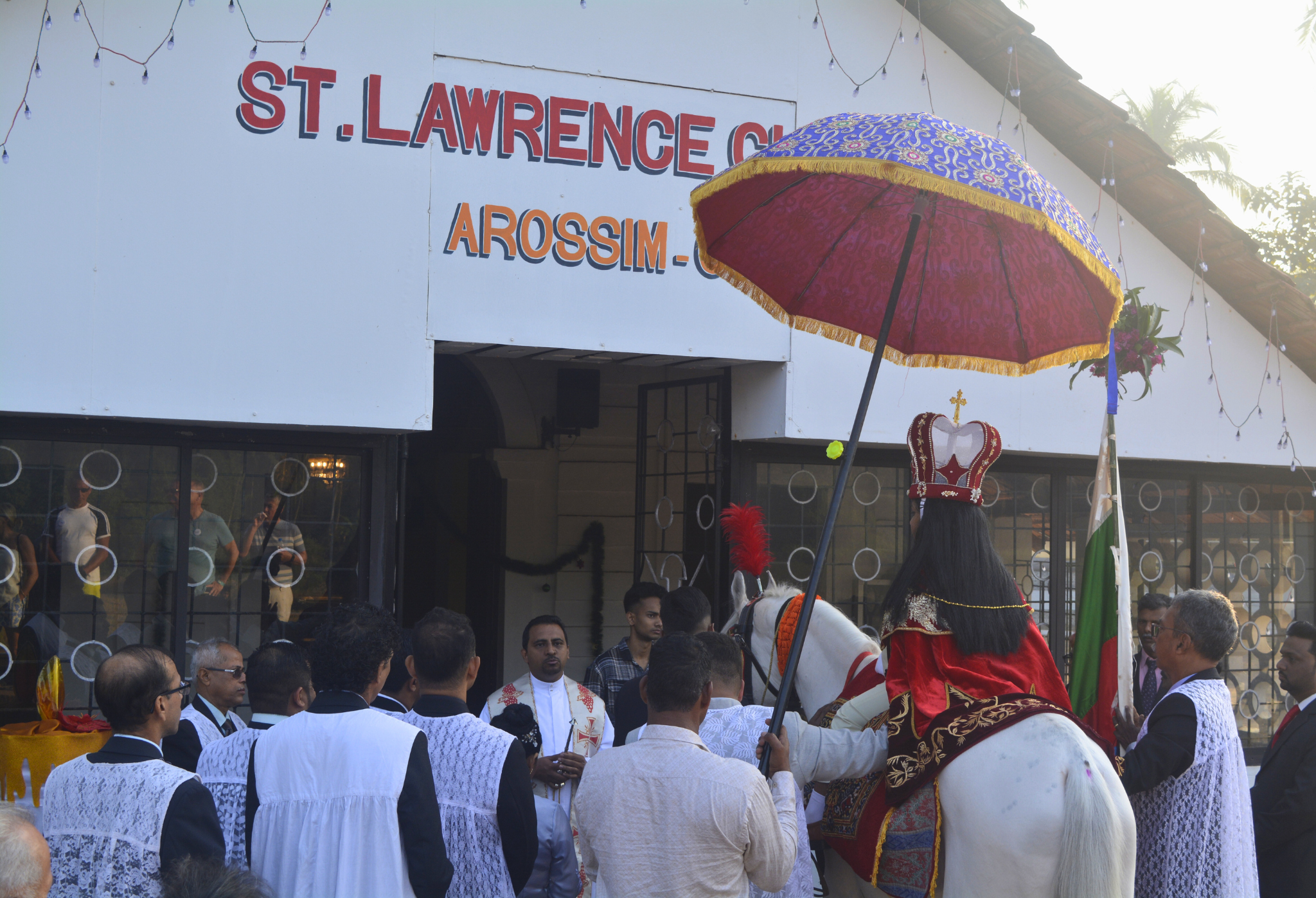
Prayers offered at the chapel
St. Lawrence Chapel, Arossim
Photograph by Clive Figueiredo
Prayer marks every stage of the Three Kings’ journey. The day begins with the alvorada, at the King’s ancestral home to announce the start of the feast. Along the route, the King from Arossim halts at the Chapel of St. Lawrence for prayers before continuing toward the hill.
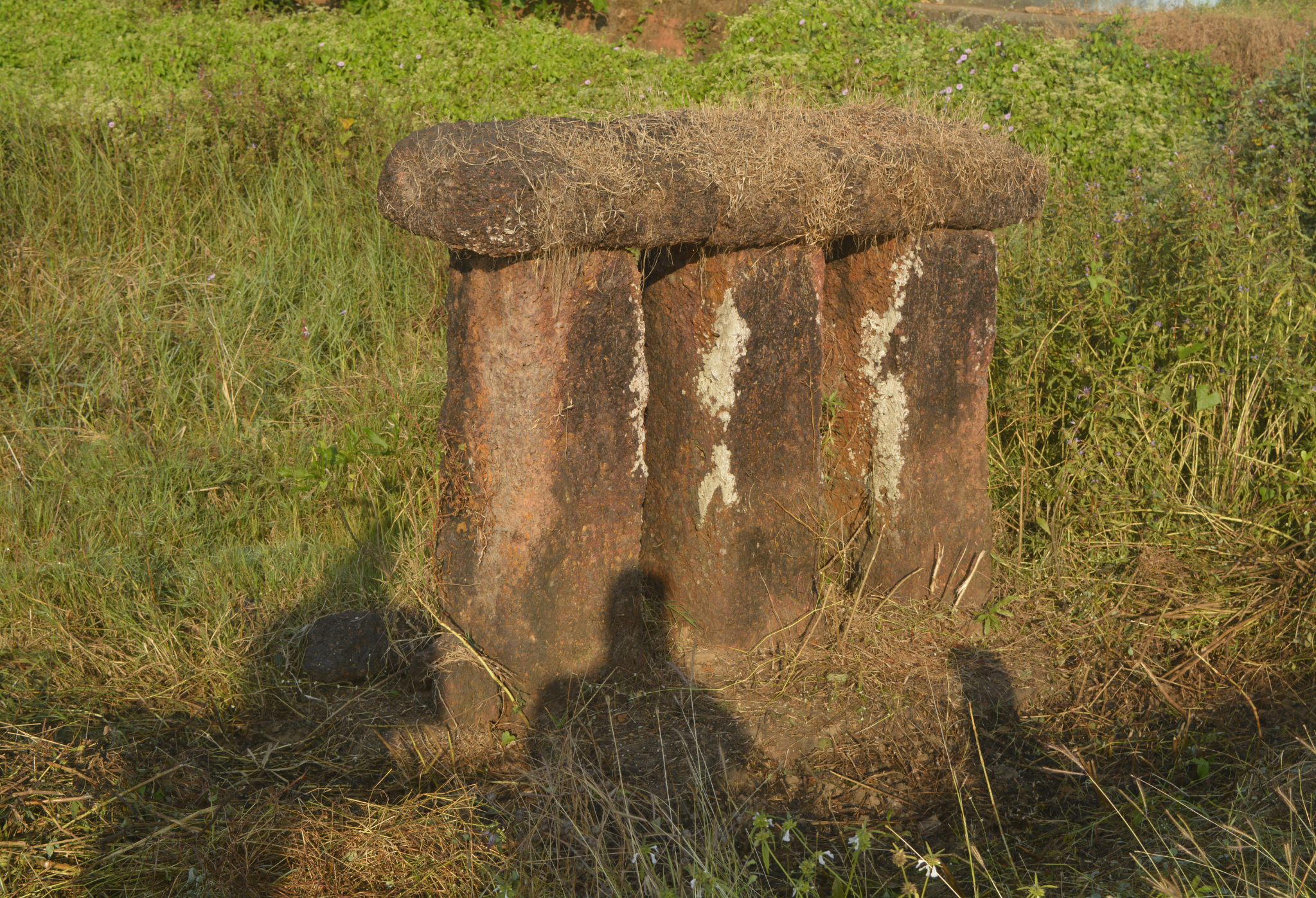
One of the many dolmens that were once along the route
Memorials or markers for ancient settlements
Photograph by Clive Figueiredo
Along the route to the hill, the flag bearers pause at four ancient stone structures known locally as dovornim or dohannim. These dolmens are believed to date back to Goa’s prehistoric past, possibly from the Neolithic or early Iron Age but more research is required to establish their true age. Their exact purpose remains uncertain, though they may have served as memorials or markers for ancient settlements. Over time, they have become woven into the Christian procession, with the flag bearers stopping to wave their flags in homage at each one. Many of these dolmens have been damaged or lost to roadwork and development, making the few that remain precious links to Goa’s earliest history.
Once the Kings reach the base of the hill, they dismount for blessings while a gaunkar briefly holds their crowns for devotees to touch in reverence. Some families pass under the horses, while others seek the blessing of all three crowns. The gathering takes place in a private coconut grove, where the hosting family once offered pez to devotees. Each King times his route carefully so that the three processions arrive in sequence without crossing paths.
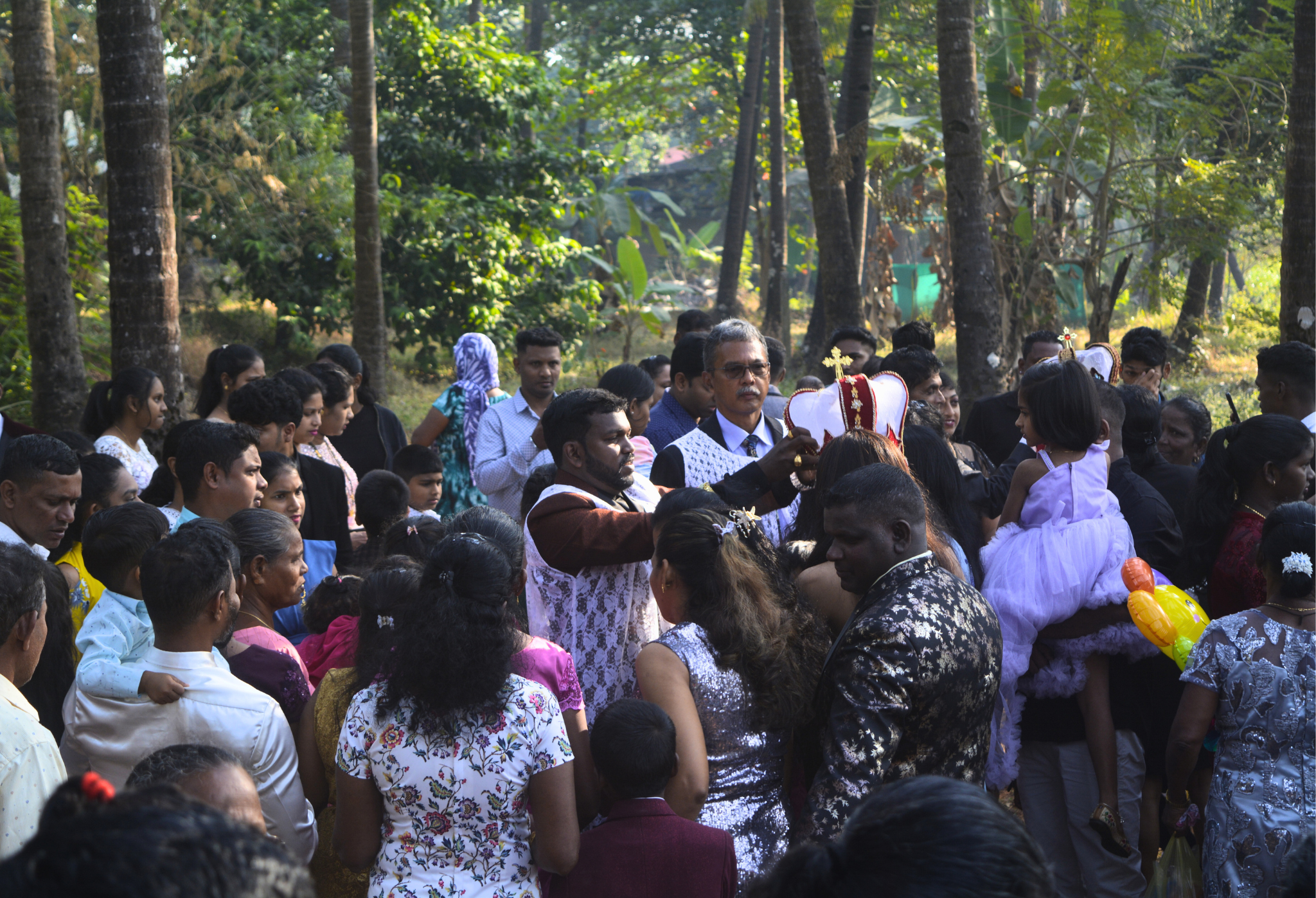
People rushing to take blessings from the crown
Coconut grove at the base of Cuelim hill
Photograph by Clive Figueiredo
Having rested the Kings then start their ascent on horseback to the Chapel of Nossa Senhora dos Remédios, where they present their gifts at the altar and attend Mass.
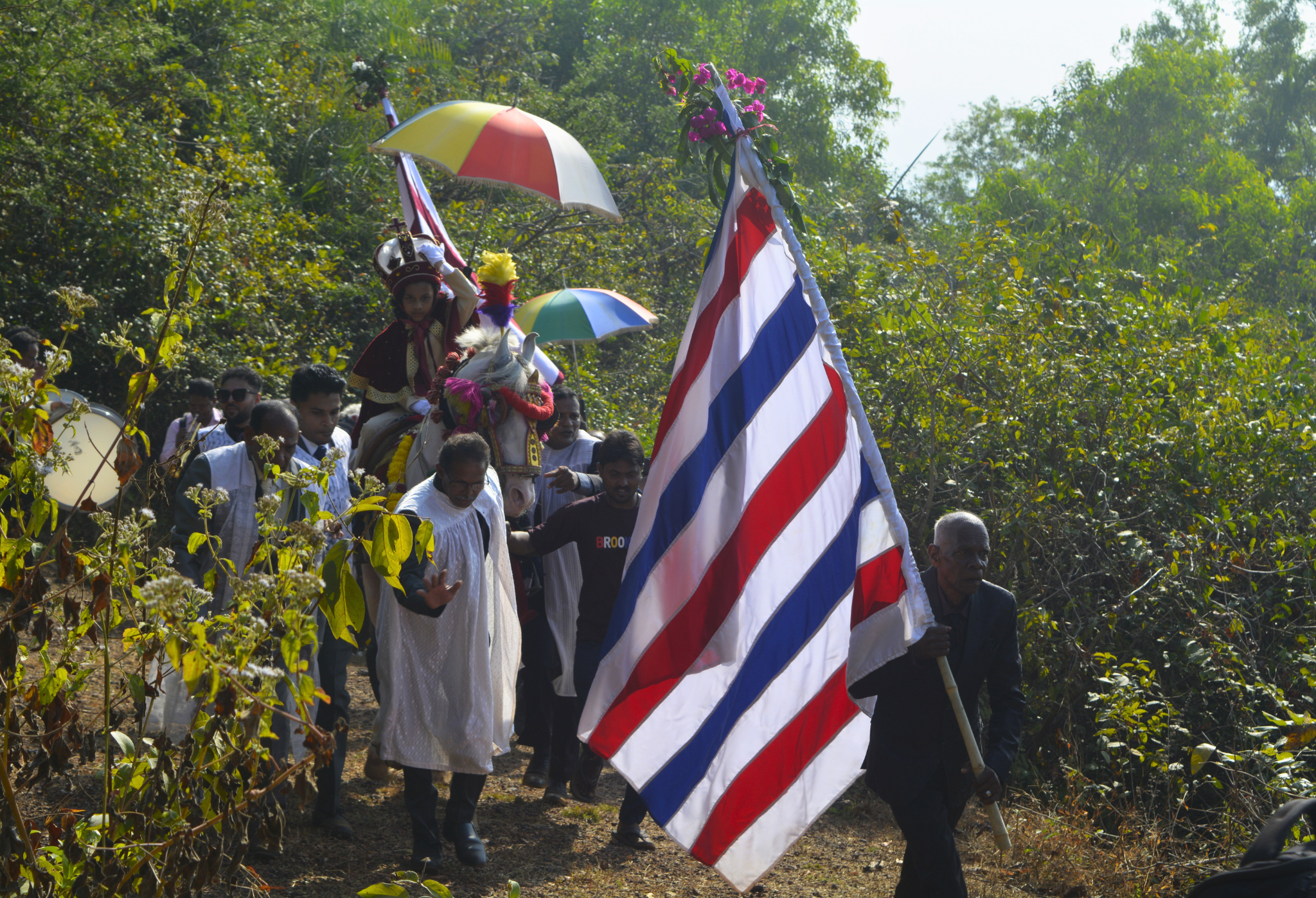
The Flag bearer of Cuelim
Making the arduous climb up the hill
Photograph by Clive Figueiredo
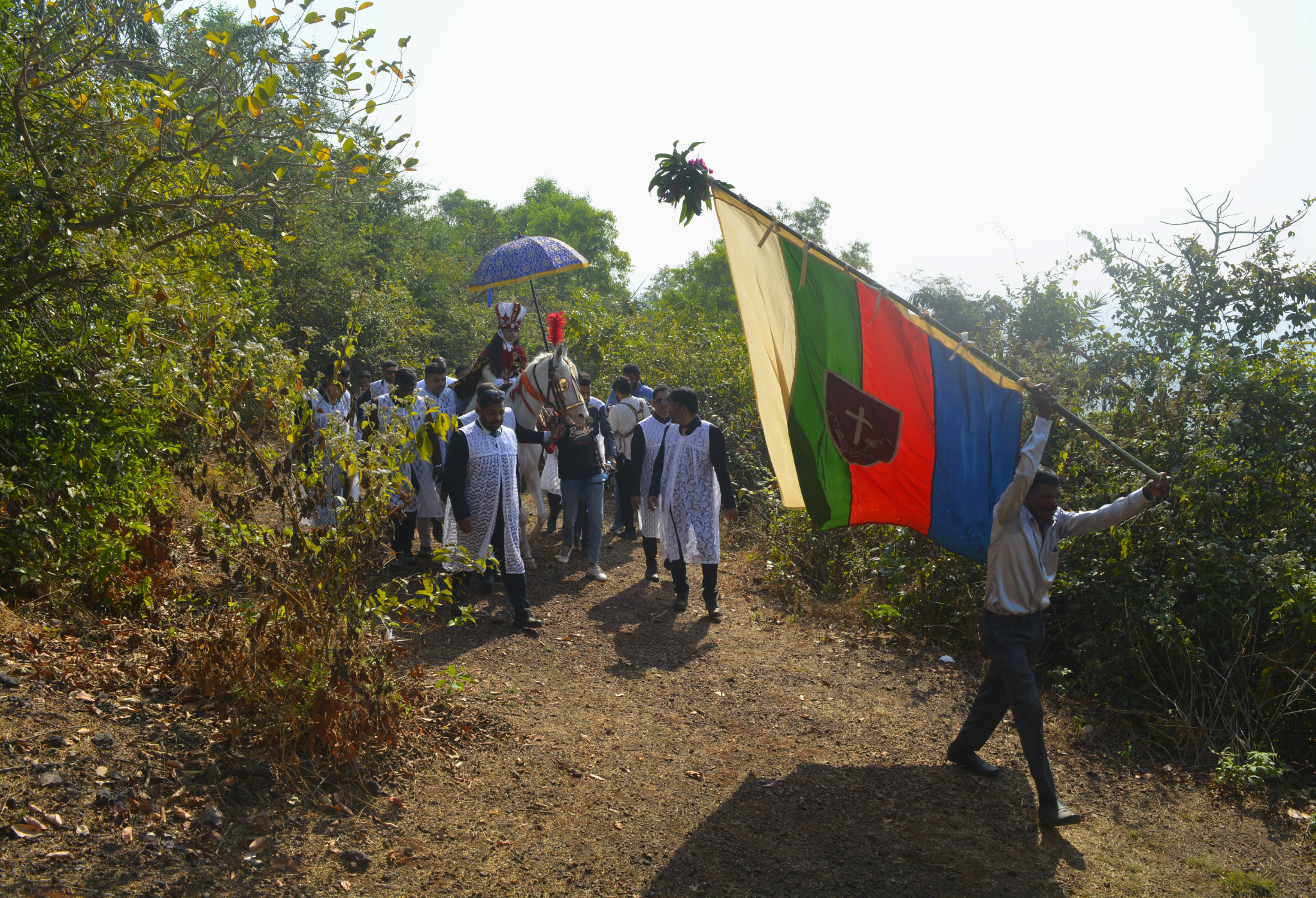
The Arossim Clans
Making their way up the hill in Cuelim
Photograph by Clive Figueiredo
An essential part of the Three Kings festivities is the brass band that accompanies each King from the very start of his journey to the end. Brass bands are woven into the fabric of Goan celebrations with the rhythmic beat of drums, the bright notes of trumpets, and the deep tones of saxophones filling the air. The day begins at the King’s home, where the band strikes up a lively tune as he mounts his horse. Fr. F. X. Gomes Catão noted that, in earlier times, these processions were accompanied by bands of music, charmelas, and the crackling of fozne, add to the excitement. The brass ensembles, who bravely climb the hill to the chapel, play every note without missing a beat!
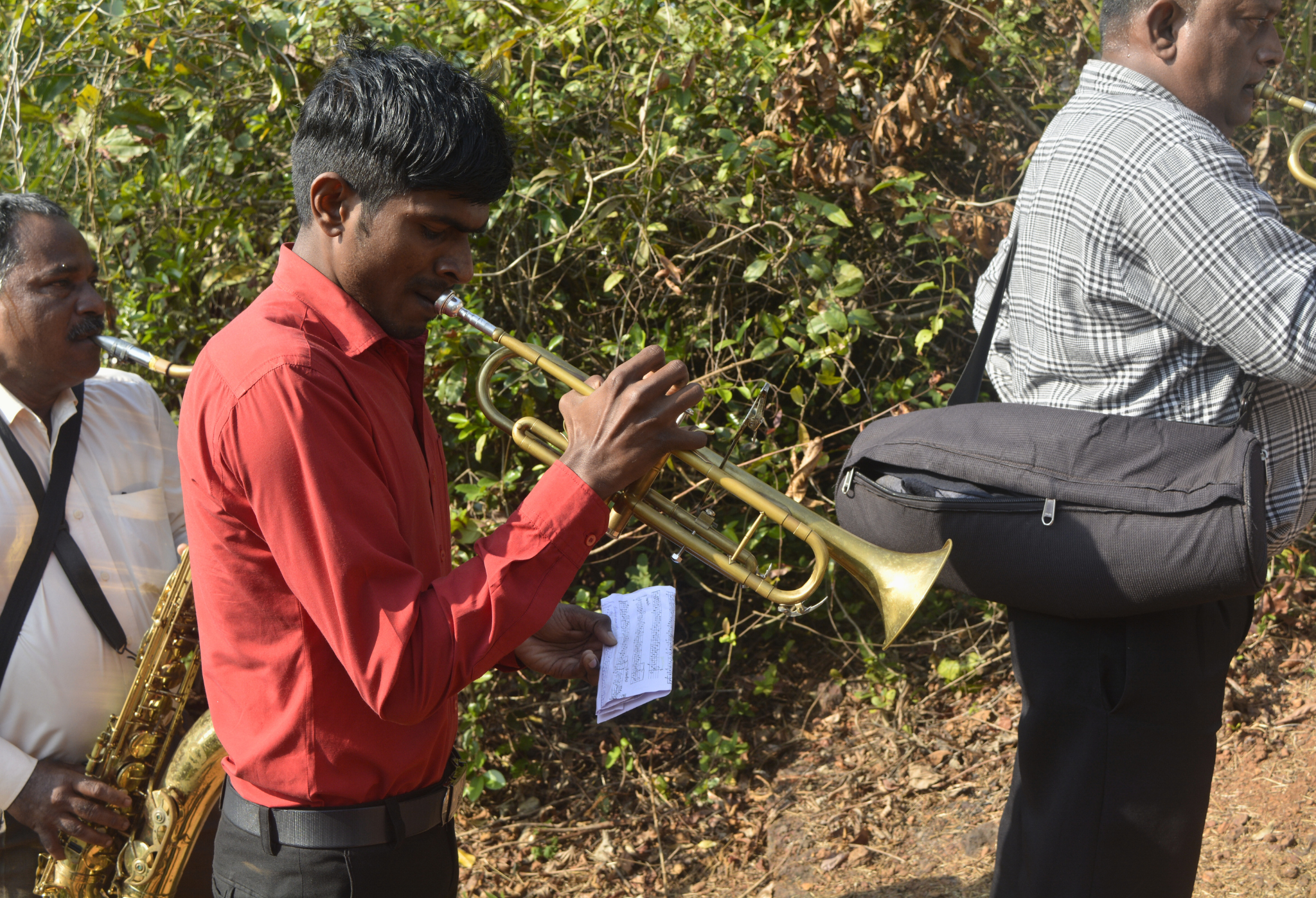
Brass Band
Playing despite the steep climb up the hill
Photograph by Clive Figueiredo
The high point of the celebration takes place at the Chapel of Nossa Senhora dos Remédios in Cuelim, where the feast Mass is held. Here, the crowns are blessed, the gifts are offered at the altar, and the Litany of Loreto and Laudate Dominum in Latin are sung, together with the beloved Konkani hymn “Ami magtam, Maiê, amche hat zoddun — besanv amcher gal, tujê hat ugddun.” (We pray oh Mother with our joined hands, send forth your blessings, opening your hands)
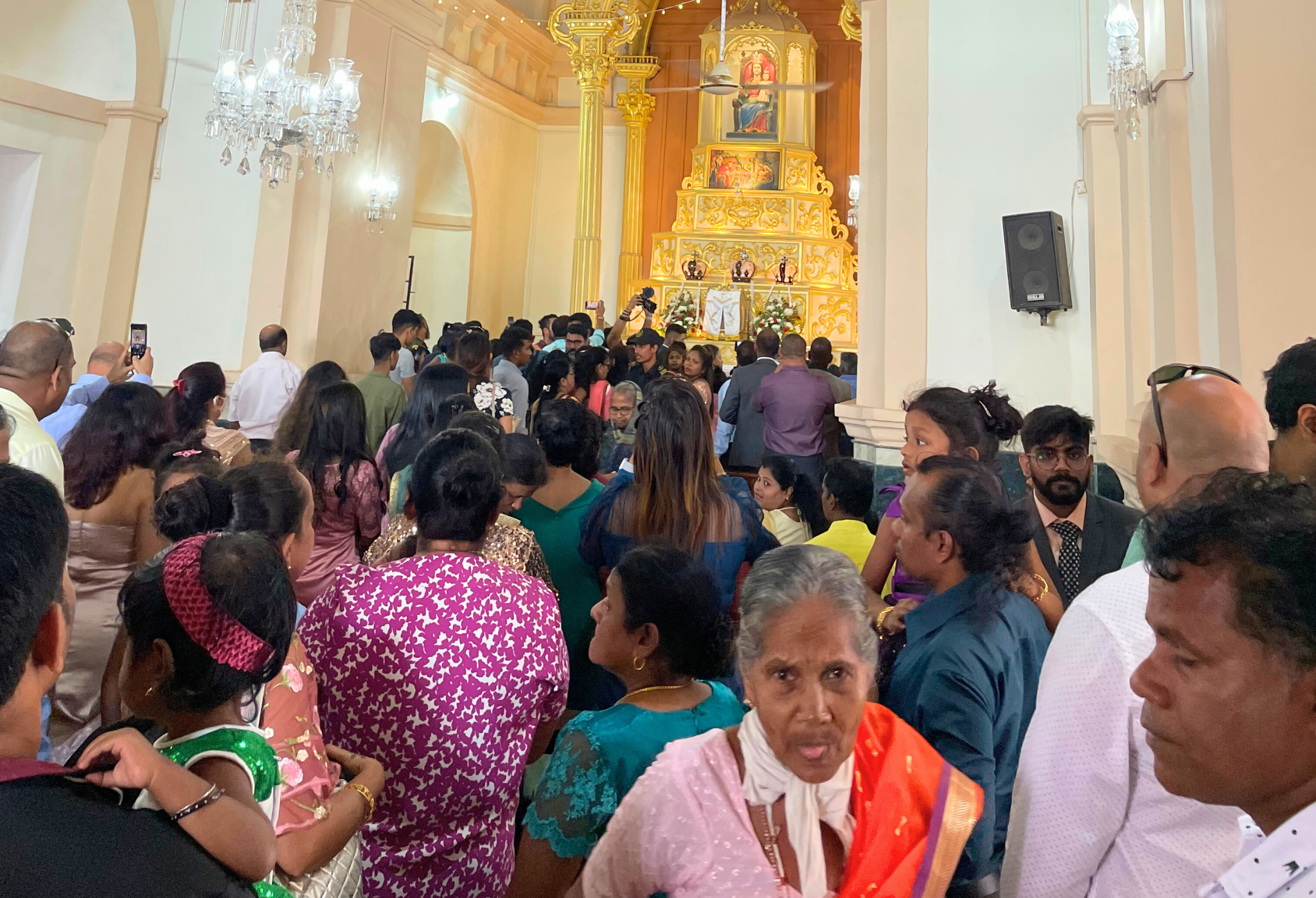
Prayers offered at the chapel
The three crowns placed on the altar
Photograph by Clive Figueiredo
At the Chapel of Nossa Senhora dos Remédios, the feast culminates in a vivid scene of devotion and festivity. As the Kings arrive, the crowd swells with pilgrims, families, and visitors gathering under the bright sky. Inside, the feast Mass fills the air with hymns and the scent of incense, followed by priests greeting parishioners at the chapel steps. Around the churchyard, a colourful fair unfolds: vendors selling grams, sweet potatoes, dried kokum, sausage pão, and local sweets; others offering scapulars, rosaries, cooking ladles, farming tools, and even children’s toys. This lively blend of faith, food, and trade transforms the hillside into a celebration of both devotion and community. As the sun begins to set, the hill slowly empties as no one lingers after dark, mindful of old tales which caution people against staying on the hill at night.
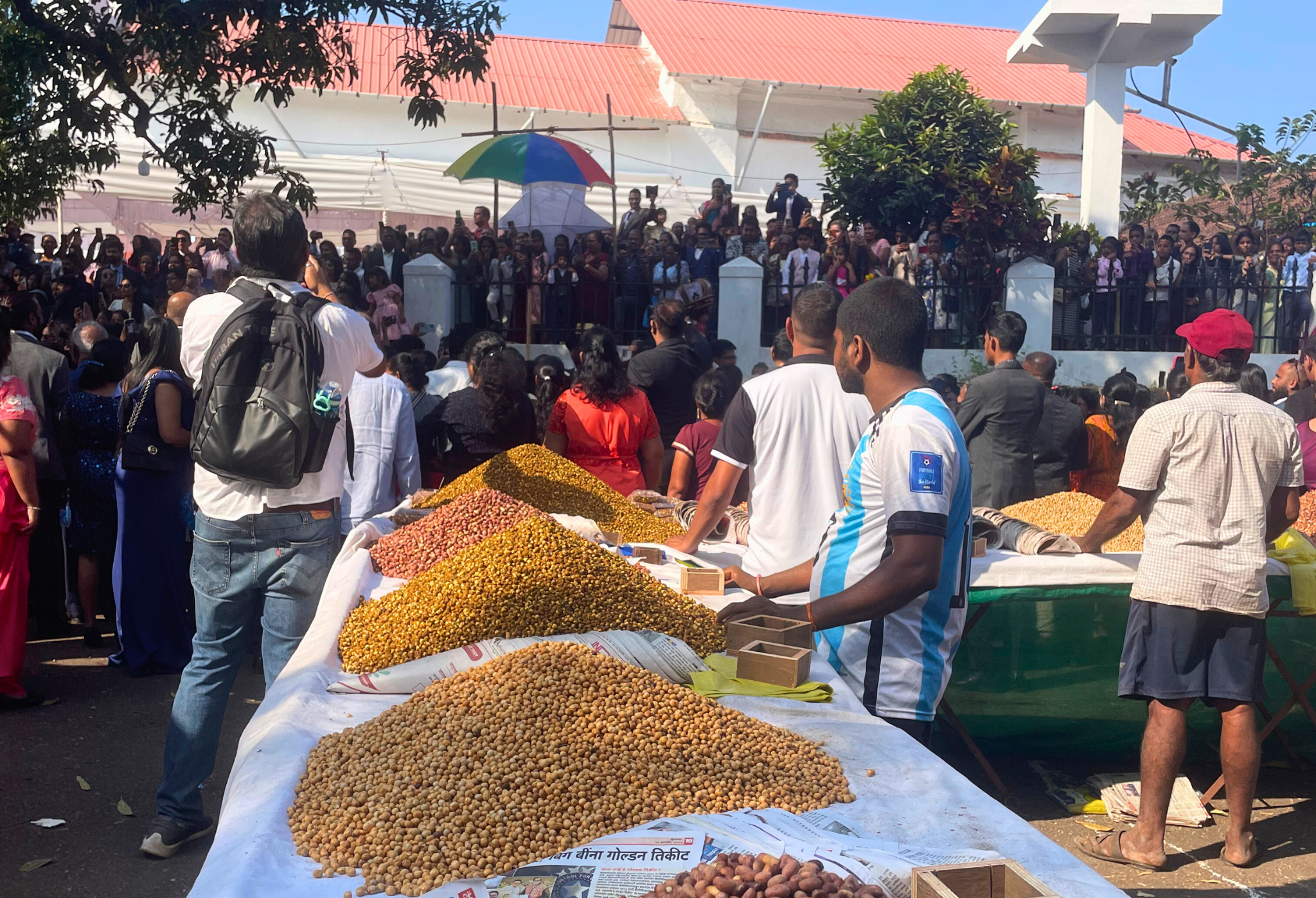
Traditional Vendor – Chonne (Grams)
Feast of the Epiphany, Cuelim
Photograph by Clive Figueiredo
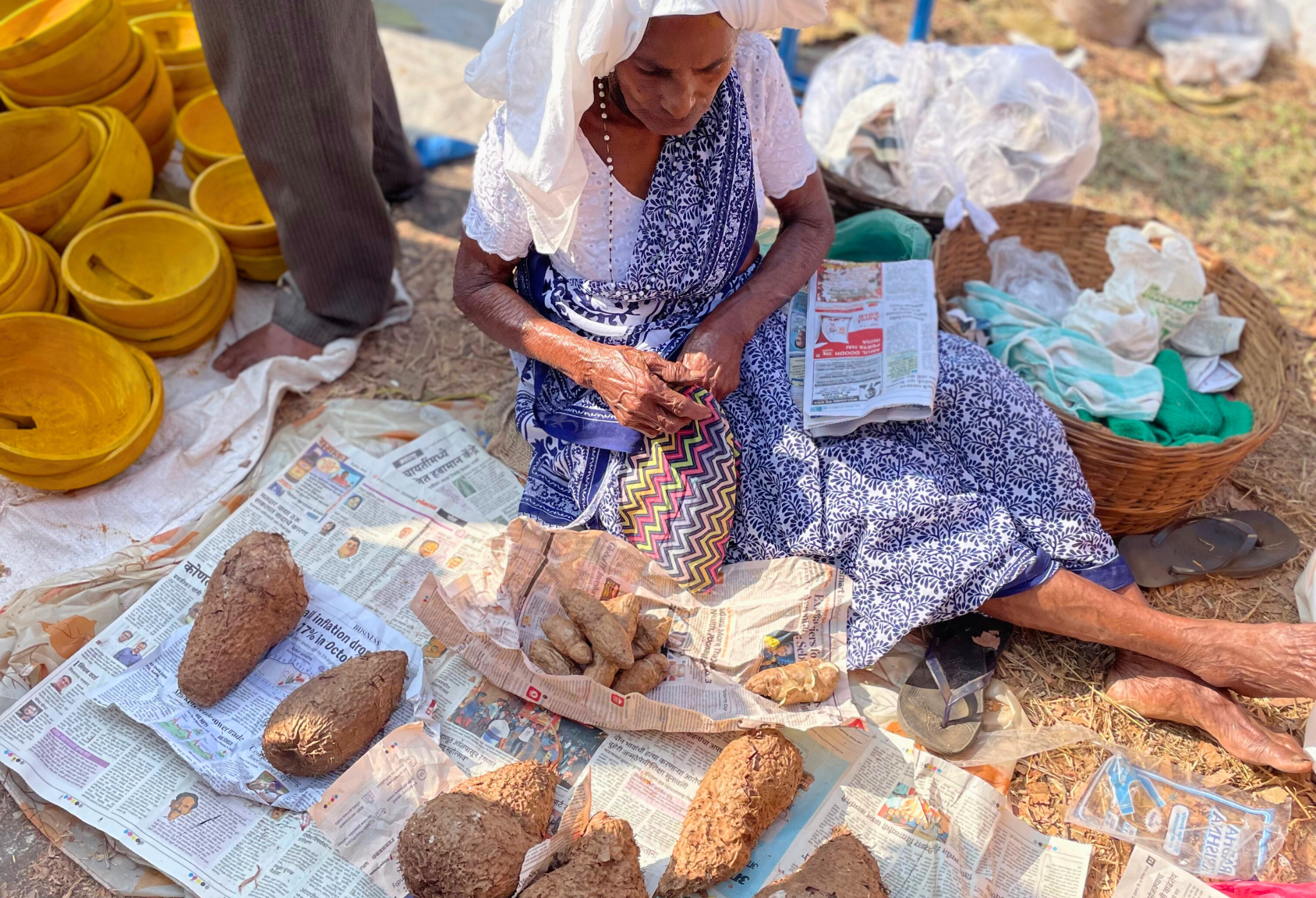
Traditional Vendor - Elephant Yam
Feast of the Epiphany, Cuelim
Photograph by Clive Figueiredo
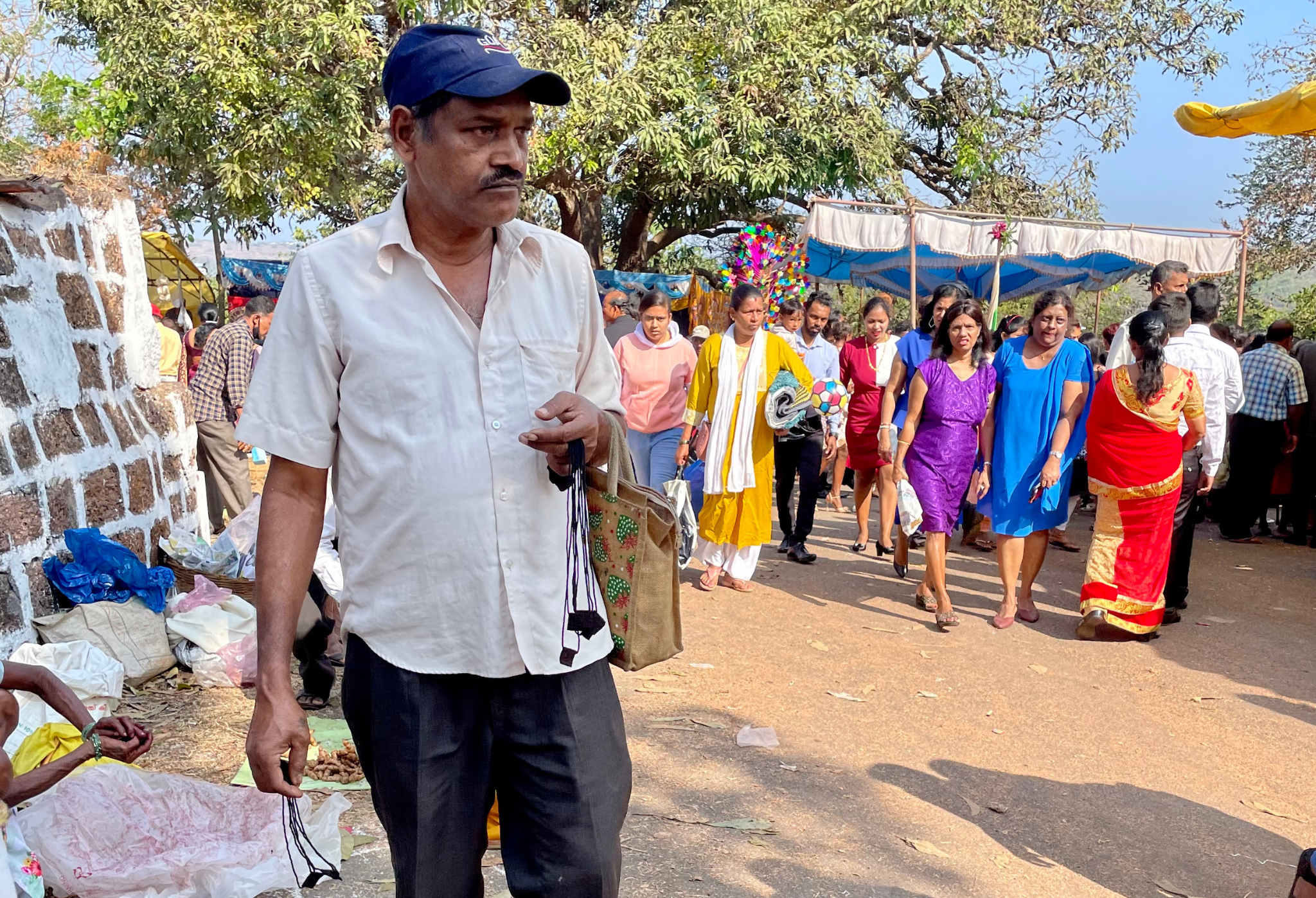
Traditional Vendor - Scapulars
Feast of the Epiphany, Cuelim
Photograph by Clive Figueiredo
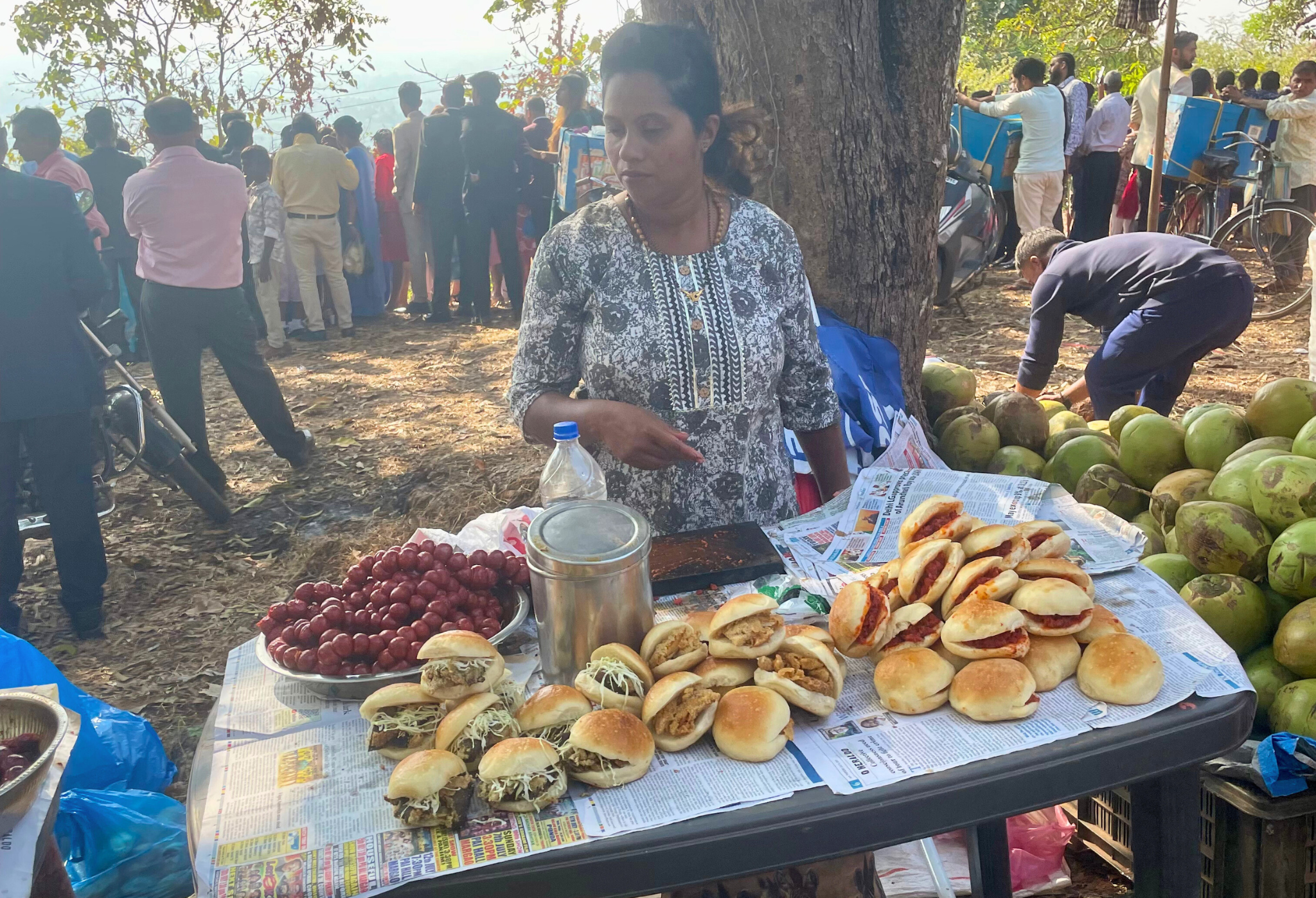
Traditional Vendor - Choris Pão
Feast of the Epiphany, Cuelim
Photograph by Clive Figueiredo
Once the Mass has concluded, the gifts offered and the crowns blessed, the Kings make their way down through a different route, in keeping with scripture, of how the Magi went back a different route so as not to encounter King Herod again (which would have put the child at risk). The Kings gather at the Church of St. Thomas (São Tomé) where the crowns are passed through the crowds for blessings. The Kings then make their way back to their respective villages but stop prior to crossing the Xim where coconut feni is poured in a line before the Kings ceremonial entry into the village.
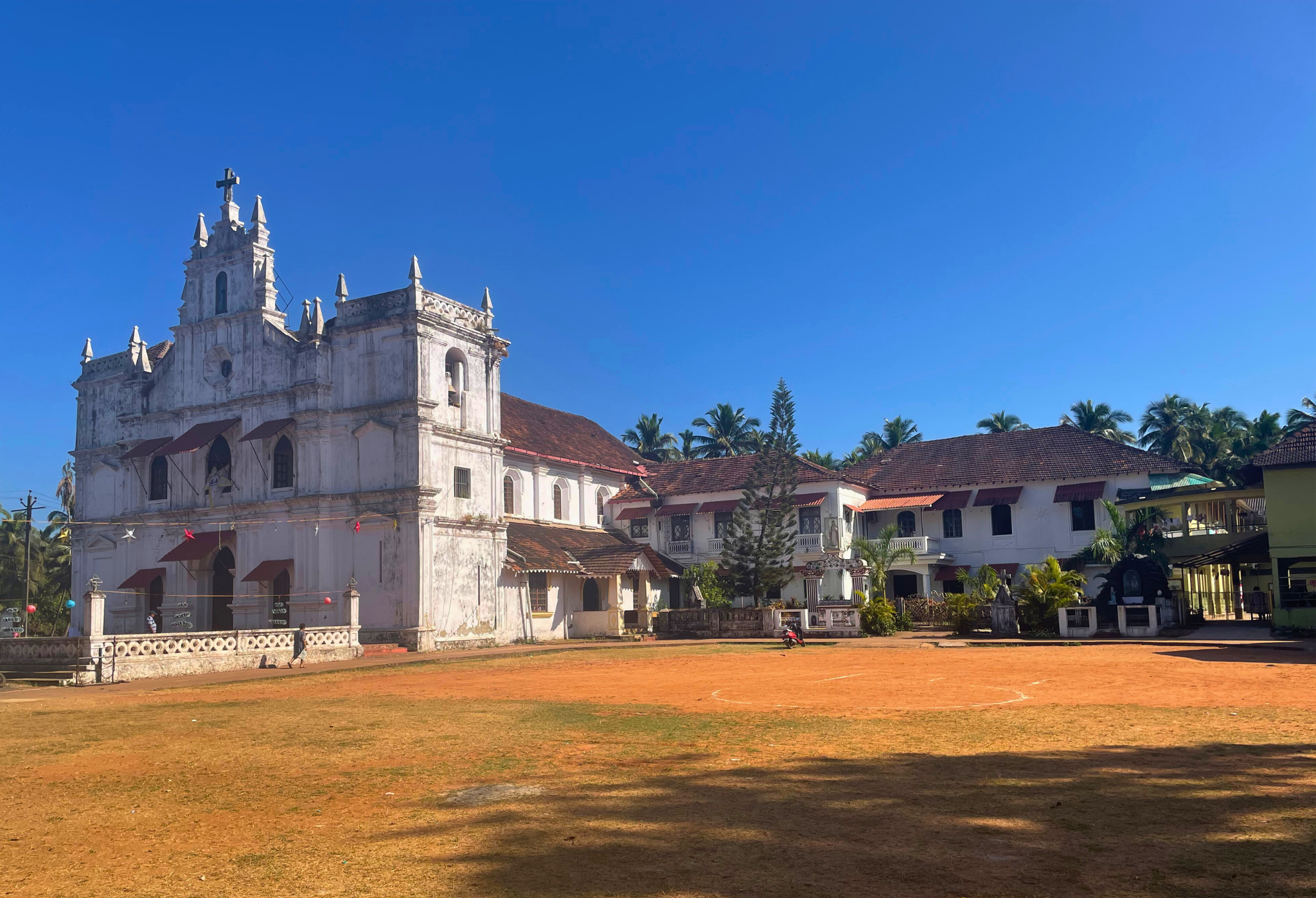
Igreja de São Tomé (Church of St. Thomas)
Parish Church of Arossim, Cansaulim & Cuelim
Photograph by Clive Figueiredo
No Goan celebration is complete without food and the Feast of the Three Kings is no exception! The day begins with the slaughter of a pig at the ancestral home of the King, a ritual symbolizing tradition, abundance, and shared community feasting. The Mestin prepares a hearty festive meal of soup, beef stew, and sausage pulao. These dishes have been part of the celebration for generations. Even the animals and musicians are not forgotten: the horse is fed chonne for strength, and while the band was once served sorpotel in the morning. Today they enjoy a simpler vegetable bhaji before beginning their climb. At the base of the hill, under the coconut groves, devotees are served comforting bowls of pez, a humble yet deeply communal meal. And before the King’s procession enters the village, three bottles of coconut feni are poured in a line along the ground at the xim marking both a sacred threshold and a spirited welcome home.
The homecoming is met with great fanfare after the King circles thrice on horseback, dismounts and sits on his throne. At this point a large community banquet is laid out with food, drinks and music for all the invited guests to share in the joyous occasion.
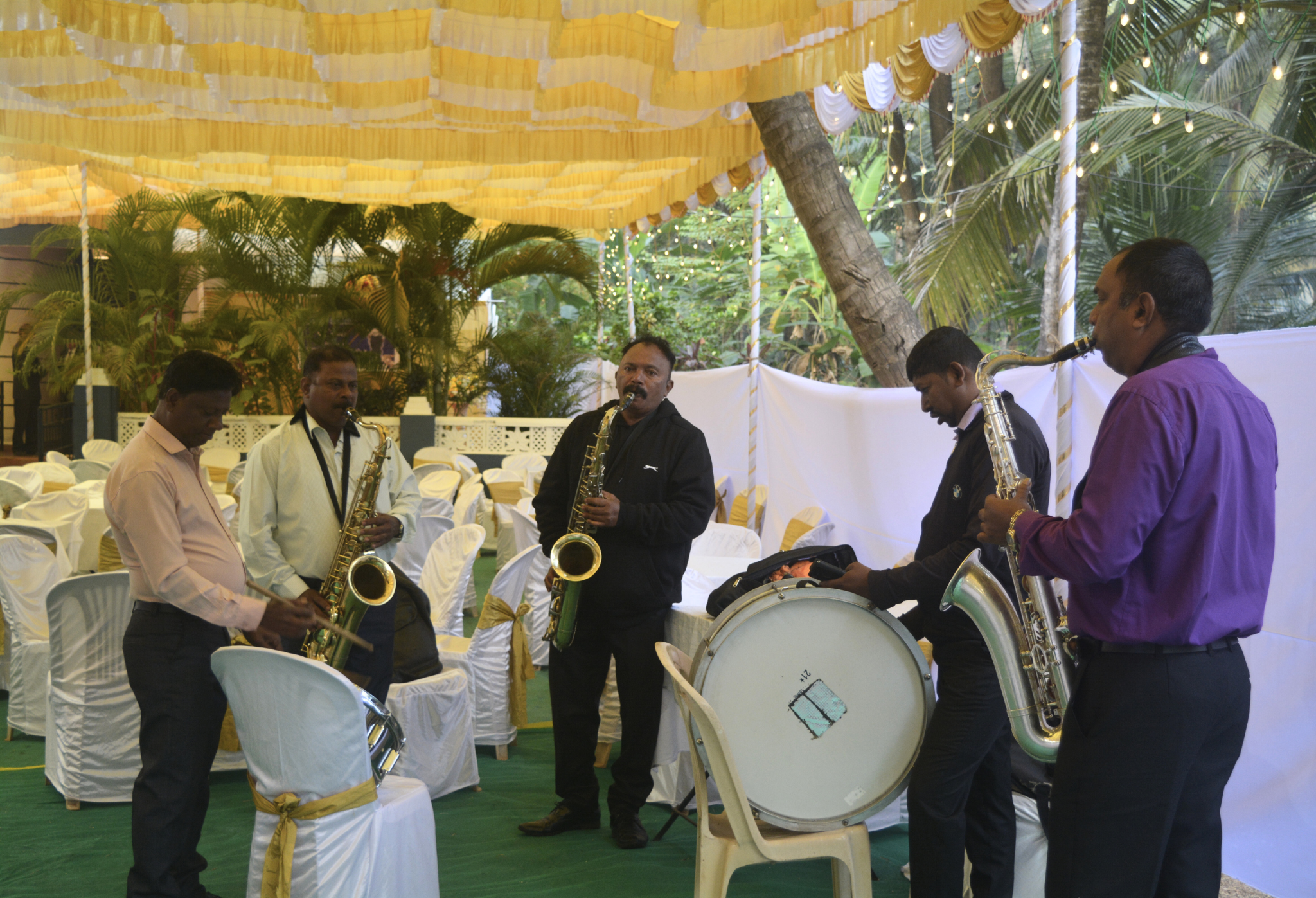
Brass Band
Ancestral house of the King, Arossim
Photograph by Clive Figueiredo
The Journey of the Three Kings in Arossim, Cansaulim and Cuelim is a tradition that has been shaped by many people over centuries. It endures because it continues to make sense to the people who perform it but it may continue to evolve. What is clear however is that each year, the three boys crowned King for a day are remembered for a lifetime.
Glossary
Alvorada – A musical performance by a brass band early in the morning which announces the start of celebrations
Bhaji – Typically a mixed vegetable dish with bread
Chardo – Catholic descendants believed to be of the former Kshatriya or warrior class
Charmela – From Portuguese, after the Spanish chirimía and Arabic saramel was a double-reed wind instrument, once common in processions
Chonne – Grams
Confraria – A confraternity of lay people from a particular parish which provide administrative assistance for the church, including celebration of feasts of patron saints
Comunidade – The early modern corporate land-holding bodies of Goa often but not necessarily controlled by the dominant caste in each village
Dovornim or Dohannim – These are traditional roadside masonry platforms in Goa which were built for travellers to rest their head-loads. It is derived from the Konkani word “dovor” which means to place on. In the case of Arossim, Cansulim and Cuelim however – Themistocles D’Silva has opined that these are megaliths made up of three large laterite blocks set upright with a fourth laid across the top – built as markers for dead ancestors or ancient settlements but further research is required in this regard.
Feni – In the context of this tradition, it refers to the traditional alcoholic spirit from Goa made from coconut sap.
Fozne – Small petards, a type of firework that makes a loud sound.
Gaunkars – Members of the dominant clans in a village, either upper castes or subaltern castes, that setup the Gauncarias or Comunidades.
Konnsachem Fest – Harvest Feast
Kokum – A tropical fruit native to India’s Western Ghats, known for its tangy, sour flavour
Laudate Dominum – A latin hymn whose text is taken from Psalm 116 in the Bible
Magi – The “wise men” who visited the baby Jesus in Christian tradition
Mestin – A local female cook specially contracted for the occasion
Nossa Senhora dos Remédios – Our Lady of Remedies
Opa – Knee length cotton tunic
Pão – Bread
Pulao – A rice dish
Pez – Rice gruel
Rozan – Garlands of marigold flowers
São Tomé – Saint Thomas
Sorpotel – A spicy, tangy and savory Goan dish made from diced pork meat and offal in a gravy of vinegar and spices
Vangors – Clans in the village
Xim — The symbolic village boundary
Bibliography
Rodrigues, Maria de Lourdes Bravo da Costa, Feasts, Festivals and Observances of Goa. Goa: L&L, 2004.
D’Silva, Themistocles, Beyond The Beach: Arossim. Goa: Goa 1556, 2011.
D’Silva, Themistocles, Unravelling History - The village of Arossim, Goa. Goa: Goa 1556, 2015.
Cardozo, Apolinario Fr. (S.J), When Goa Celebrates. Panaji: Dalgado Konknni Akademi, 2022.
Braganza Pereira, A.B, Ethnography of GOA, DAMAN & DIU Translated by Maria Aurora Couto, Delhi: Penguin Random House, 2008